

Which Of The Following Is A Limitation In Using Animal Models In Nutritional Research?
Rates of obesity and metabolic diseases are rapidly growing, and much attending is paid to written report the effects of consumed foods on human wellness. We know already that dietary preferences can be a serious factor of diseases and even a cause of them, in a man. Withal, we do not know molecular and cellular mechanisms behind these furnishings. Thus, we practice non know how these negative processes can exist neutralized or macerated past preventive or curative interventions. As such mechanistic studies are needed.
These studies tin be in principle carried out in vitro or in vivo. Food consumption and consumed nutrients affects both the brain and a periphery. Another words, these processes are systemic and involve a lot of interplay mechanisms. Consequently, in vitro approach has very express potential to achieve research goal with studies on diets. For example, the use of a tissue from peripheral organs or brain, cell cultures or even mini-organs would not help to sympathise systemic mechanism.
With in vivo approach, human studies cannot help to understand the mechanisms and they exclude any interventions. The remaining solution and so is the apply of animal models – of course, in compliance with the three R's principle i (reduction, refinement, replacement). "Replacement" defines the option of the object: to use the lowest phylogenetic ordered creature possible, when information technology's incommunicable to utilise in vitro methodology or a non-animal model, to address a given scientific question.
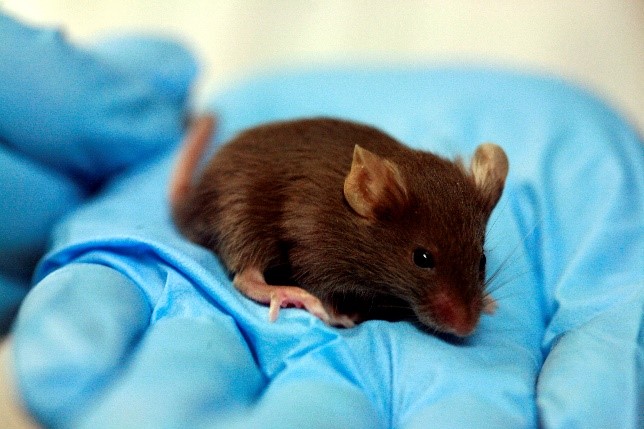
The most commonly used animal in nutritional research is a mouse. Are mice perfect organisms to model dietary-induced disorders?
Like us, humans, mice are omnivore mammals, and almost all the genes in mice share functions with the genes in humans. In comparison to other mammals, mice have pocket-size size of the trunk (3000 times smaller than a human), and genetically identical mice (like human monozygotic twins) are available for experimental employ. Basal metabolic rate per gram of body weight is 7 times greater in mice than in humans which speeds up the development of diet-induced illness. Considering of the rapid generation and short life wheel (about 2 years) mice are used to study the effects of maternal nutrition in the offspring and model diet role in aging processes. Mice brandish complex behaviours, including social interactions, cognitive functions and emotionality, that are like to human features.
The use of mice in nutritional research offers a unique tool: possibility to study the role of a given gene using genetic modification. Generation of mutant mice is well established in comparing with other mammalian species. Many genetically modified mouse models were developed over the years, including knockout mice in which genetic material is deleted, mice carrying additional genetic material or "humanized" models expressing man genes.
Numerous mouse models were generated to utilize in nutrition inquiry. Probably the virtually popular model in diet research is diet-induced obesity model (DIO model) 2 in which animate being is fed high-fatty or high-density diets – to mimic the nigh common crusade of obesity in humans. Changes seen in DIO mice are remarkably consequent with those seen in obese patients. DIO mice are used to investigate mechanisms of obesity development and novel medication screening.
Another prominent example of a model in diet research is the ob/ob mouse 3. Due to a mutation in hormone leptin these mice brandish severe obesity, insulin resistance and dyslipidemia. Studies performed on this model revealed new aspects of hypothalamus role inhuman free energy metabolism.
Mouse model plays its role in evolution of anti-obesity and anti-diabetic medication. Information about the receptors and hormones that regulate food intake and free energy balance can be used to choose a target for a new drug. For instance, mice lacking serotonin v-HT2C receptor were found to showroom balmy obesity and blazon ii diabetes4, suggesting the part of this receptor in regulation of food intake. Recently appetite reducing drug (lorcaserin), 5-HT2C receptor agonist, was developed.
Yet, there are certain limitations in translating discoveries from mouse models to humans in nutrition enquiry. There are clear differences in feeding patterns, nutrient metabolism and hormone control betwixt humans and mice. In case those aspects are key features of the written report, another available model could exist used.
No model is perfectly mimicking all aspects of homo illness. It is likely that better new models will be developed in the nearest hereafter to study the human conditions not adequately replicated in mouse models. But for now, mouse model is a useful tool in studying dietary-induced diseases and it plays an important role in translational enquiry and advancement of human health.
Reference
1. Tannenbaum, J. & Bennett, B. T. Russell and Burch'due south 3Rs so and now: the demand for clarity in definition and purpose. J. Am. Assoc. Lab. Anim. Sci. 54, 120–32 (2015).
2. Hariri, North. & Thibault, 50. High-fat diet-induced obesity in animal models. Nutr. Res. Rev. 23, 270–299 (2010).
3. Ingalls, A. Yard., Dickie, Chiliad. M. & Snell, G. D. Obese, a new mutation in the firm mouse. J. Hered. 41, 317–318 (1950).
4. Tecott, L. H. et al. Eating disorder and epilepsy in mice lacking 5-HT2C serotonin receptors. Nature 374, 542–546 (1995).
Source: https://newbrainnutrition.com/why-do-we-use-mouse-models-in-diet-research/
Posted by: moodyoursend.blogspot.com
0 Response to "Which Of The Following Is A Limitation In Using Animal Models In Nutritional Research?"
Post a Comment